
Wooden or composite shutters: which is right for you?
Both make beautiful shutters. Wood has a natural warmth; composite is tougher day to day. We specialise in composite, which we recommend for most rooms, and real wood is available on request.
- Free home visit
- Quote fixed for 30 days
- 10-year guarantee on composite
- No sales reps
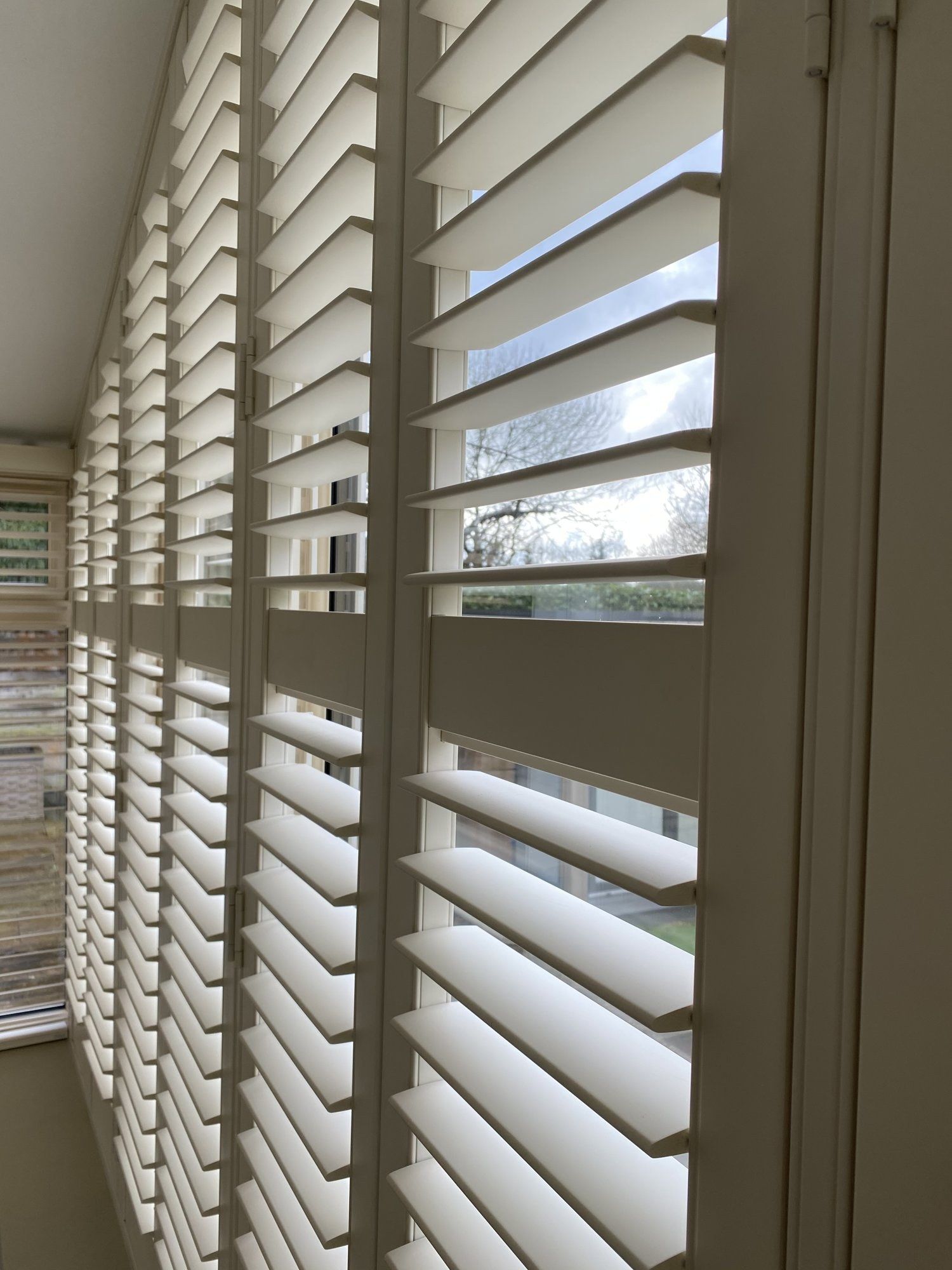
How they compare
Composite
- A tough PVC-based material with an aluminium core in the louvres and uprights, for strength and straightness.
- No sanding, varnishing or repainting.
- Wipes clean with a damp cloth.
- A smooth, even painted finish, with no grain showing through.
- Single parts can be replaced, so a repair doesn't mean a whole new shutter.
- Generally better value than real wood.
Best for: Most rooms in most homes. It's what we specialise in.
Real wood
- Natural timber, with the warmth of real wood.
- Painted, or ask us about a stained finish that shows the grain.
- A natural material that moves with heat and humidity, so it can warp, crack or swell in steamy or very sunny rooms.
- Paint can chip and need touching up, and softer woods dent more easily.
- Generally costs more.
Best for: Living rooms and bedrooms where you'd love the look of real wood.
Choosing between wood and composite
Why we recommend composite for most homes
Composite is tough, easy to look after and good value, and painted composite looks very like painted wood. For most rooms in most homes, it's the sensible choice.
That's why we specialise in it. We'd rather fit one material really well than everything averagely.
When real wood makes sense
If you'd love the look of real wood, or a stained finish that shows the grain, real wood can be the right choice for a living room or bedroom. It's available on request, and Matt will tell you honestly whether it suits the room. The price and the guarantee for real wood are confirmed on your quote.
What are "wooden" shutters actually made of?
It's worth asking, because "wooden" can mean several things. Many wooden shutters sold in the UK are made overseas, often from basswood or paulownia, a soft, very light, fast-growing timber. The uprights are often made from layers or short lengths of wood glued together rather than one solid piece.
At the cheaper end, some "wood-look" shutters are MDF (wood fibres pressed and glued together), or a mix of a wooden frame with MDF louvres.
None of that is wrong in itself, but it's good to know what you're paying for. Whichever firm you speak to, ask what the frames and louvres are made of.
What about MDF shutters?
MDF shutters are made from wood fibres glued and pressed together, then painted. They're often the cheapest option, but they're heavy and don't like damp. We don't fit them.
Wooden or composite: your questions
Do you fit wooden shutters?
We specialise in composite shutters, which we recommend for most homes. Real wood is priced on request, with its guarantee confirmed on your quote, and Matt can talk you through both at the visit.
Do composite shutters look like plastic?
No. Painted composite shutters look very like painted wooden ones. Matt brings samples so you can see and feel them for yourself.
Are wooden shutters more expensive?
Real wood shutters generally cost more than composite ones of the same size and style. Your written quote will show the price for exactly what you choose.
More pages
Also worth a lookSee both for yourself
Matt brings samples to the visit, so you can see and feel the difference.