
Shutter frames, explained.
Every shutter hangs in a frame. You hardly notice it, but it is what keeps the panels straight and lets them close neatly. Here are the main types, and how we choose.
- Free home visit
- Quote fixed for 30 days
- 10-year guarantee on composite
- No sales reps
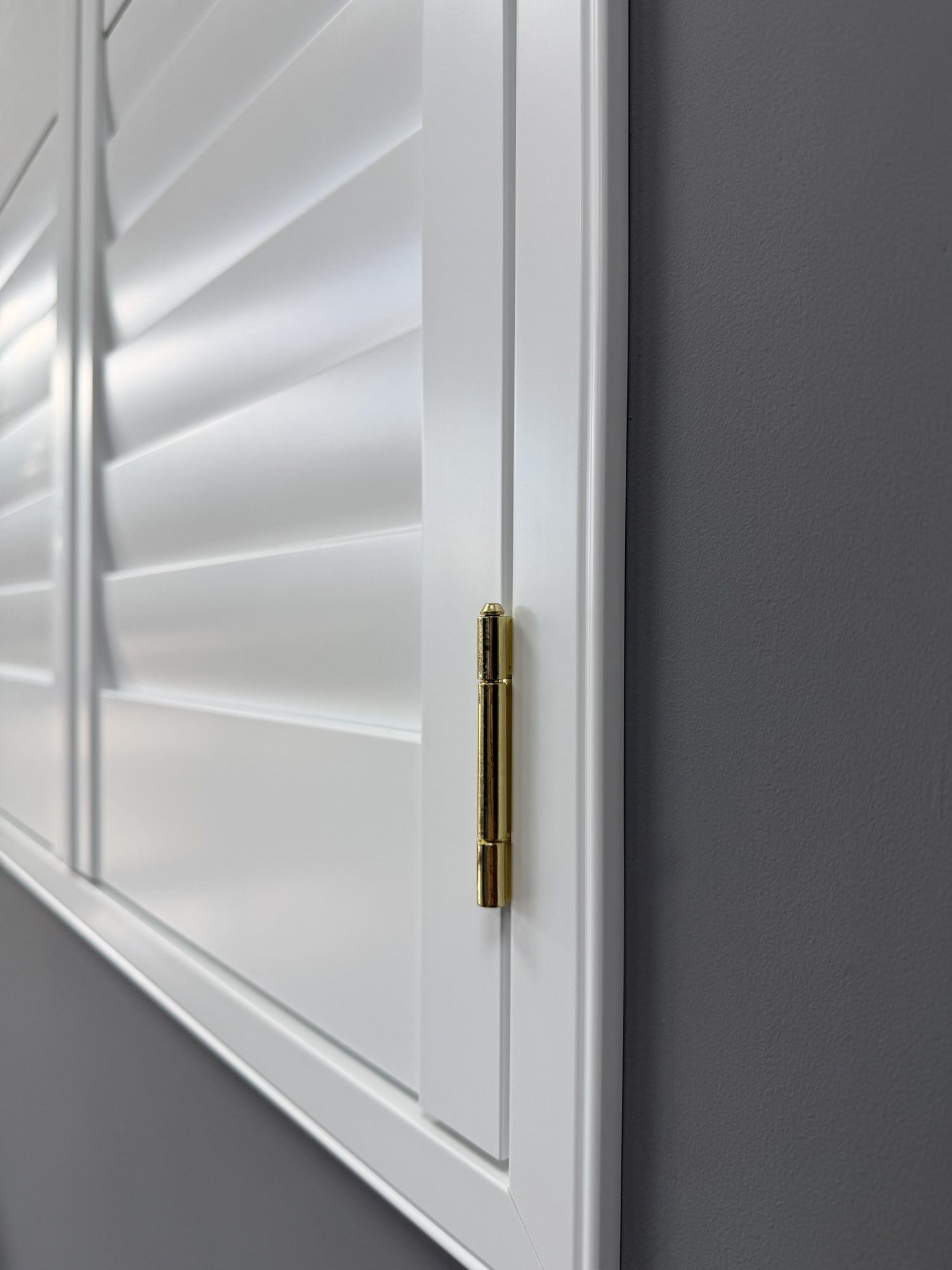
The main frame shapes
L-frame
Inside the opening. A slim, L-shaped frame that can sit back inside the recess, which makes it a good choice where there is a windowsill or window board, and it gives the most built-in look.
Z-frame
At the edge of the opening. A frame with a lip (a narrow edge that overlaps the edge of the recess). The lip covers small gaps and uneven edges, for a neat, finished look. Where a windowsill sticks out, we plan the frame around it.
Frames on the wall face
On the wall. Where the recess is shallow or the window opens into the room, the frame can be fixed to the wall round the opening instead.
More: inside or outside the recess · shutter jargon explained · what to expect
Frames: your questions
Do all shutters need a frame?
Almost always. The frame is what the panels hang in, and it keeps them square even when the window opening is not. It is slim and the same colour as the shutters.
Which frame will my windows have?
It depends on each window: the depth of the recess, the windowsill, the handles and how square the opening is. Matt looks at every window at the visit and recommends the right frame for each one.
More pages
Also worth a lookSee the samples in your own home
Book a free home visit. We measure every window, bring samples to see and touch, and email you a fixed written quote. Made to measure and fitted in roughly 4 to 6 weeks from confirmation of your order.